Now booking projects — free, itemized quotes

Start here
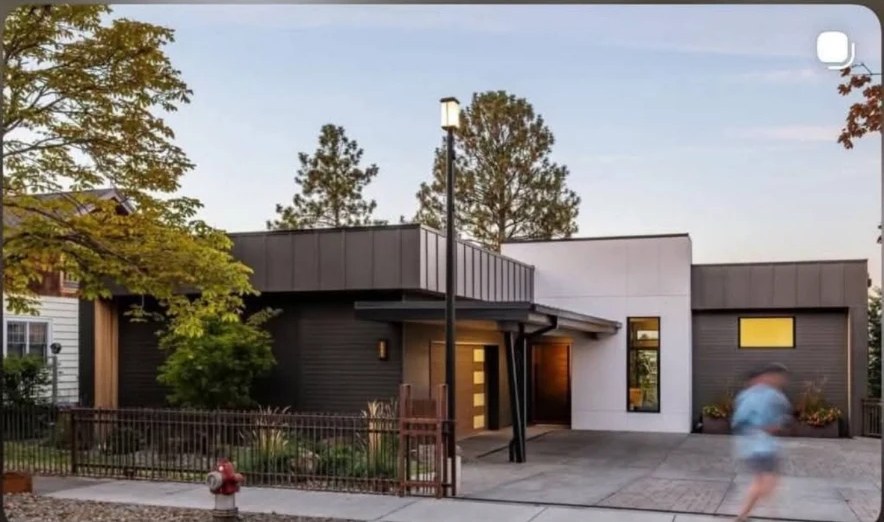
Street-side home exterior with fiber cement lap siding and trim

Fiber cement siding

A painted finish that survives our winters

Lap, shingle, and large-format fiber cement installed to manufacturer spec — correct clearances, flashed openings, and joints detailed so the finish warranty stays intact.

Fiber cement is the right call when you want the classic painted look of wood without repainting every seven years — and when fire resistance matters, which around here it does. It handles freeze-thaw without cupping or splitting, but only if it's installed to spec. Ground clearance, joint flashing, and fastener depth are what separate siding that lasts thirty years from siding that swells at the bottom course.

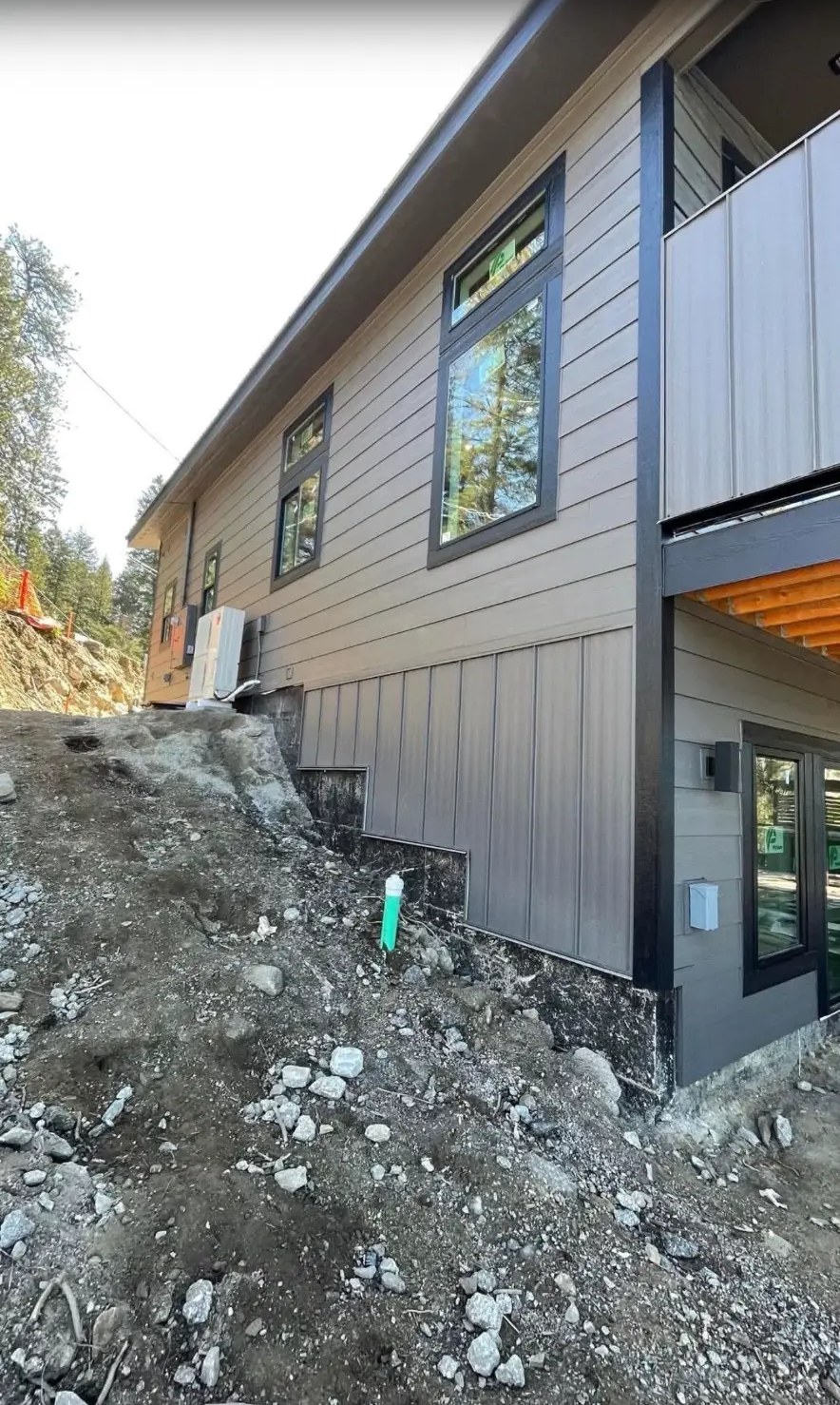
Mixed lap and board-and-batten elevation on a hillside home

Installed to manufacturer spec

Clearances at grade, roof, and decking, flashed butt joints, correct fastener type and depth, and gapping where the material needs it. These are the items an inspector and a warranty claim both look at, and they're the first things skipped when a crew is racing the weather.

  • Lap, shingle, and large-format panel systems
  • Correct clearance at grade, roofs, and decks
  • Flashed butt joints and blind-nailed fastening
  • Finish warranty kept intact by spec installation
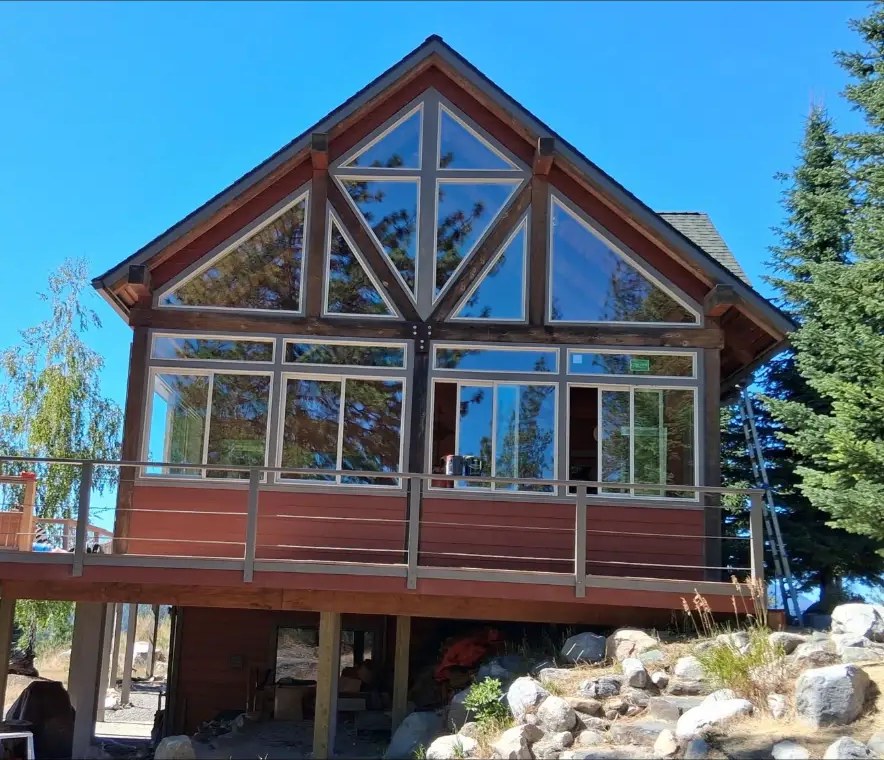
Gable end elevation with siding and trim detailing

A dry wall behind the siding

Weather barrier with taped seams, properly flashed window and door openings, and substrate repair wherever we find soft sheathing during tear-off. Siding is the raincoat; the barrier behind it is what actually keeps the framing dry.

  • Weather-resistive barrier with taped seams
  • Pan-flashed and taped window and door openings
  • Full tear-off with haul-away
  • Sheathing repair and re-nail before new siding
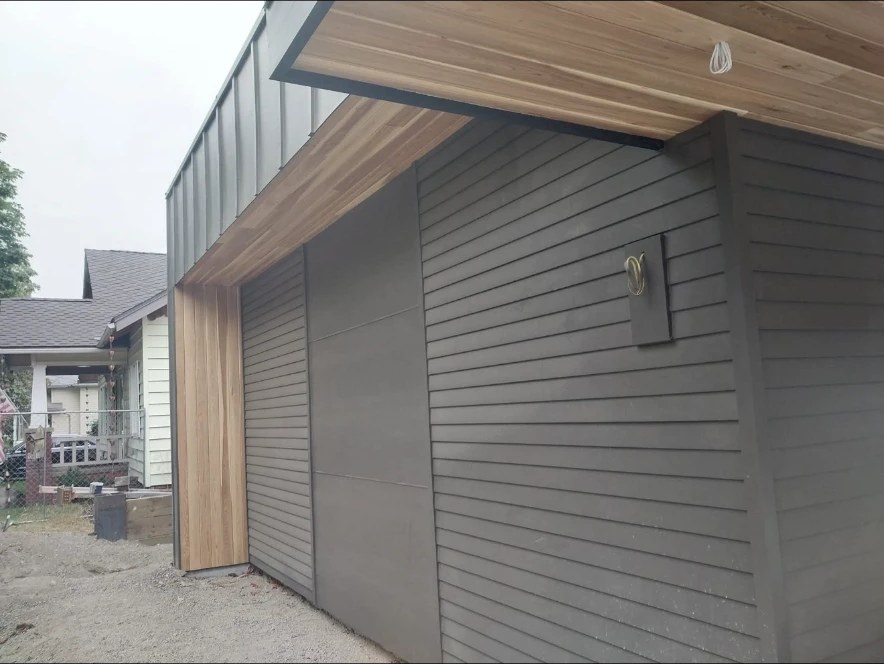
Cedar soffit and lap siding detail

Trim, soffit, and finish

Pre-finished boards or field paint, matched trim and corner boards, soffit and fascia packages, and clean transitions where fiber cement meets metal or cedar accents. The trim is what makes an elevation look designed rather than sided.

  • Pre-finished or field-painted options
  • Trim, corner board, soffit, and fascia packages
  • Transitions to metal, cedar, or board-and-batten accents
  • Caulk and touch-up at the punch walk

How the job runs

  1. 01

    Measure and quote

    Kirt measures each elevation, notes existing conditions and openings, and sends an itemized quote in one to two business days.

  2. 02

    Product and color

    You choose the profile and whether it comes pre-finished or gets painted on site. Trim package is decided before ordering.

  3. 03

    Tear-off and wall prep

    Old siding comes off, soft sheathing gets repaired, and the weather barrier and flashings go on.

  4. 04

    Install and trim

    Courses go on to spec with flashed joints, then corners, trim, soffit, and fascia are fit.

  5. 05

    Walk it together

    We check every opening and transition with you and finish the punch list before the final invoice.

Questions about fiber cement siding

Call (509) 862-9801 and you'll talk to Kirt, the owner.